

A traffic study can feel like a “developer thing” until a Dallas intersection blows up online. One dashcam clip shows a near-miss, and the comments pile up: “That light never works,” “No one can see,” “People cut in from the wrong lane.” Meanwhile, Dallas weather flips fast. When a freeze triggers burst pipes and crews block lanes, drivers make sharper merges on slick roads. So when an intersection goes viral, treat it like a warning light.
Why “viral” usually means “repeat problem”
Most viral near-miss clips share a pattern. Drivers feel rushed. Lines of cars stack up. Someone gets stuck in the middle because the next green comes too late. Another driver “takes the gap” on a left turn. Add glare, rain, or wet pavement after a utility break, and the same corner turns into a daily stress test.
That’s why the freeze and burst-pipe clips matter, even if they don’t mention traffic. A broken water line can flood a curb lane, pull emergency vehicles into the worst spot, and squeeze everyone into fewer lanes. As a result, drivers make last-second moves. Near-misses don’t come from “one bad driver.” They come from a setup that invites mistakes.
What a traffic study should prove
You don’t hire an engineer for a thick report that collects dust. You hire them for proof you can use with the city, your landlord, your partners, or your own team.
First, the study should prove the real conflict point. People blame “drivers.” However, the field shows patterns. Maybe left turns block a through lane. Maybe right turns cut across a crosswalk. Once you name the conflict, you can target a fix.
Next, the study should prove whether the line of cars stays in a safe place. Engineers call that line a queue. If the queue spills into a travel lane or blocks a driveway, drivers brake hard and weave. So the study must show how long the queue gets during peak times and whether the turn lanes can hold it.
Then, the study should prove the signal helps—or hurts. Signal timing shapes behavior. If a short green leaves long waits, drivers push yellows and block the box. If a permissive left turn asks drivers to “take chances,” near-misses spike. Sometimes a protected left turn helps. Other times it shifts the problem upstream by creating longer queues. So the study must show the tradeoff with real numbers and clear notes.
After that, the study should prove access points don’t create chaos. Many close calls happen at driveways near an intersection. People hunt for entrances, delivery trucks slow down, and drivers cut across lanes. A traffic study should test driveway spacing, turning rules, and channelization. Often, a small access change reduces risk more than a big roadway change.
Finally, the study should prove the intersection can survive real life. Dallas deals with construction, emergency response, and sudden weather swings. A burst pipe can push water across pavement and close a lane right at the corner. So a useful traffic study asks, “What happens if we lose a lane for a few hours?” “Where will the queue go?” “Will it block a fire lane or a major driveway?” Those answers turn fear into a plan.
How engineers build proof you can trust
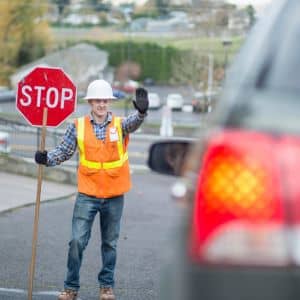
Good studies start outside, not in a spreadsheet. Engineers count turning movements during the busiest hours for that site. They also watch speeds and driver choices, because behavior shows where the design fights human habits.
Next, they document what cameras miss: faded striping, confusing signs, poor lighting, blocked sight lines, and tight curb corners that force wide truck turns. When crash data exists, they review it. However, they also treat near-miss videos as evidence, since many dangerous moments never appear in any report.
Then the engineer tests options and ties each option to a result: less conflict, shorter delays, and queues that stay out of harm’s way.
What fixes usually calm a viral intersection
People assume they need a full rebuild. Yet many intersections improve with focused changes.
Sometimes the fix starts with paint and clarity. Fresh lane arrows, stop bars, and better advance signs guide drivers earlier, so they don’t dive across lanes. Sometimes the signal needs a timing tune-up or better coordination along the corridor. In other cases, a protected left turn removes the highest-risk move.
Lighting also matters, especially during early winter sunsets and rainy nights. Plus, civil design can help traffic safety more than people expect. If water sheets across a corner, drivers brake late and slide. If an inlet clogs, ponding grows and visibility drops. So your traffic study should connect with drainage and utility planning, not live in a separate silo.
When you should order a traffic study
Order a traffic study early if you plan a new development, add a drive-thru, change a driveway, or increase trips to a site. Also, order one if tenants complain about risky exits or if queues block your entrances. Even without new construction, a viral near-miss clip can give you the push you need to fix a real problem.
A simple next step that clients like
You don’t have to start big. Many clients start with an intersection risk walkdown. An engineer visits the site, documents the conflicts, and recommends the top fixes. Then you can step up to a full traffic study with counts and modeling when you need approvals or when you want a strong business case.
Dallas intersections can change fast. So, when a near-miss goes viral—especially during disruptions like freezes and utility breaks—use that moment. A traffic study should prove what’s happening, what causes it, and what change will reduce risk for everyone who uses that corner.
