

You send in your plans. You expect a few comments, maybe a quick fix, then approval.
Instead, you get a long list of notes. You fix them, send the plans back, and wait again. Then more comments show up. Now your timeline slips, and no one can explain why it keeps happening.
This is common in Dallas. Many projects don’t get stuck in construction. They get stuck in engineering design review.
What Happens During an Engineering Design Review
When you submit a project, reviewers check every part of the design. They are not there to redesign your work. They check if everything is clear, complete, and ready to move forward.
They look for missing details. They compare different sheets. They check if the design makes sense from start to finish.
If something feels unclear, they send comments back. That sends your project into another review cycle with the City of Dallas or the reviewing authority.
Each cycle takes time, and that is where delays start to build.
Why Plans That Look Done Still Get Sent Back
A lot of plans look finished. The drawings are clean, the layout looks right, and everything seems in place.
But review doesn’t work based on appearance. It focuses on what’s missing or unclear in the details.
Sometimes a small detail isn’t shown. Other times, one sheet doesn’t match another. In some cases, parts of the design come from assumptions instead of clear information.
These issues don’t stand out right away. However, they become obvious during review.
That’s why projects still get sent back, even when they look ready on paper.
Why Small Issues Turn Into Big Delays
One missing note can hold up a full review. One unclear detail can trigger a long list of comments.
Then you fix the issue, but you still have to wait for the next review cycle.
That waiting period is what slows everything down.
Even small corrections can take weeks because the project has to re-enter the full Dallas review queue. As a result, one small issue can turn into a long delay.
This is where many developers start feeling stuck. The work gets fixed, but the timeline keeps moving.
Why Review Cycles Keep Repeating
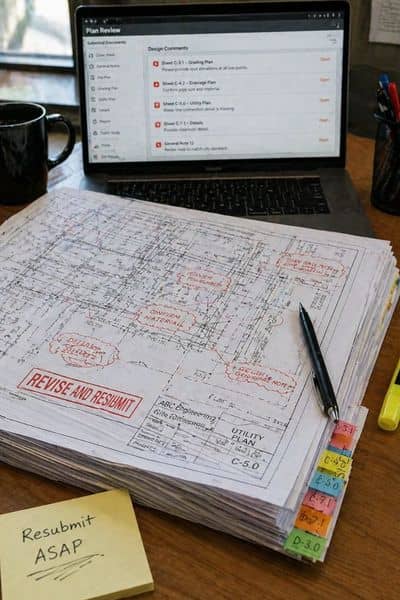
Once a project enters review, it follows a loop.
You submit. You get comments. You fix them. You resubmit. Then you wait again.
If new issues appear, the cycle repeats.
This usually happens when the engineering design is not fully coordinated from the start. One correction can reveal another issue. Then another.
So instead of one clean review, the project goes through several rounds before approval.
That is where most delays come from in Dallas projects.
Why This Starts With Engineering Design
It’s easy to think the process is the problem. It feels slow, and sometimes it is.
But most of the time, the review just reflects what was submitted. If the plans are clear and complete, things move faster. If there are gaps, the review slows down.
A lot of that comes back to the engineering design services behind the plans. When the work is properly developed, it answers questions before they come up. It shows exactly what is planned and how everything fits together.
When that clarity is missing, the review process has no choice but to slow things down.
How Better Engineering Design Speeds Things Up
Projects move faster when the design is ready before submission.
That means going beyond layout and making sure every part of the plan works together. It also means checking the design the way a reviewer would, not just the way a designer sees it.
When the engineering design is tight, there are fewer questions. Fewer questions mean fewer comments. Fewer comments mean fewer delays.
That is how projects stay closer to schedule in Dallas approvals.
What Developers Should Do Before Submitting Plans
Submitting early can feel like progress, but it often leads to setbacks later.
It helps to step back and review the plans as if seeing them for the first time. Do they tell one clear story? Do all sheets match? Is anything unclear or left open?
Working with a team that understands Dallas review expectations also makes a difference.
That extra effort before submission often saves weeks during approval.
Delays Start Earlier Than Most People Think
Most project delays do not begin in the field. They begin when plans are sent in before they are fully ready.
That is why some projects move smoothly while others get stuck in repeated review cycles.
The difference comes down to engineering design quality.
When the design is clear, complete, and well coordinated, the review process moves faster. When it is not, delays start early and continue building.
Fixing the design early keeps everything else moving.
