

Building often feels exciting—whether it’s putting up a new fence, adding a backyard deck, or extending a home. Yet what many homeowners and contractors don’t realize is that even small mistakes in measurements can trigger big headaches. City reviewers check every detail, and when something doesn’t line up with official records, permits can get delayed or denied. That’s why a boundary line survey plays a bigger role than most people expect.
Why Boundaries Matter More Than You Think
When the rain clears and construction crews move in, accuracy becomes the foundation of every project. Retaining walls, driveways, and sheds all depend on property lines that match what’s on record. If your measurements differ from what the City of Dallas or Dallas County Appraisal District has on file, reviewers can stop your project before it starts.
The tricky part? The difference isn’t always about major errors. Sometimes, it comes down to something as small as how distances are converted between grid coordinates and ground measurements. A few inches may not sound like much, but on a crowded lot, that gap can put a fence over the line or push a wall into a setback.
What a Boundary Line Survey Really Does
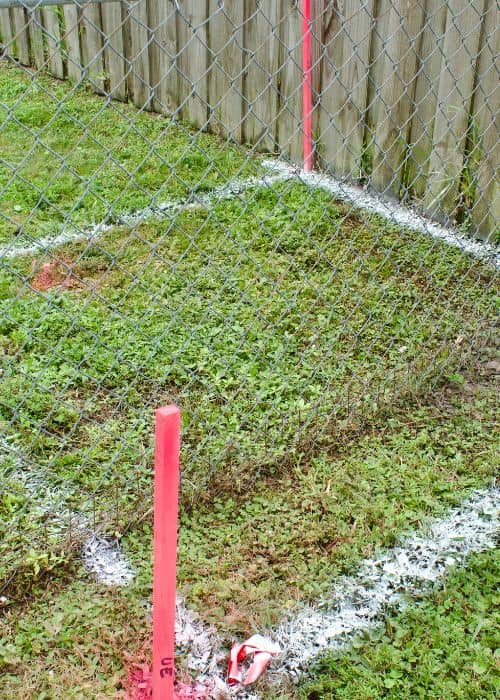
Boundary line surveys define the exact edges of a property. Licensed surveyors locate corners, establish precise lines, and mark improvements like fences or garages. For a homeowner, this might look like stakes in the yard or a detailed drawing. For city reviewers, it’s an official record that proves your project respects zoning codes and setback rules.
Unlike a general property survey, a boundary line survey zeroes in on where ownership begins and ends. This is especially important in neighborhoods where lots are tight, easements run through backyards, and new construction happens close to existing homes.
The Grid-to-Ground Problem
Here’s where things get complicated. In Dallas, surveyors often work in the Texas North Central Zone (EPSG:2276), part of the State Plane Coordinate System. That’s the “grid”—a mathematical model of the earth’s surface. On the ground, though, you’re measuring distances with a tape or total station. The two don’t always match perfectly.
This is known as the grid-to-ground problem. A small scale factor—often just 0.1%—can cause noticeable shifts when transferred to real-world measurements. For example, a 100-foot line on the grid might measure slightly more or less on the ground. That small difference, once applied to a fence or addition, can cause it to cross into a setback or even a neighbor’s property.
How Professionals Prevent Errors
Experienced surveyors don’t leave this to chance. They use TxDOT’s adjustment sheets to apply surface factors for Dallas and Tarrant Counties. This corrects for the curvature of the earth and keeps grid measurements aligned with ground reality.
They also use precise conversion factors when working between meters and U.S. Survey Feet, carrying the math out to 12 decimal places. While that might sound like overkill, the result is undeniable: clean data that holds up under review.
Finally, they cross-check everything against Dallas County Appraisal District maps and recorded plats. If the survey notes differ by more than a tenth of a foot, they flag it. This diligence keeps your project aligned with both property records and city permit requirements.
Why DIY Doesn’t Cut It
Some homeowners try to avoid costs by using old surveys, online mapping tools, or mobile apps. The problem? These tools don’t account for grid-to-ground differences. More importantly, only a Registered Professional Land Surveyor (RPLS) can certify official boundary surveys.
Without that seal, the City of Dallas won’t accept your documents. Even worse, mistakes can lead to stop-work orders, legal disputes with neighbors, or expensive corrections. A $1,500 survey may feel like an extra step, but compared to rebuilding a wall or re-submitting plans, it’s the cheapest insurance you can buy.
Where Permits Go Wrong
City officials see these mistakes all the time. A fence post ends up six inches over a property line. A garage addition extends into a side setback because the ground measurement was never corrected from grid data. Even small patios can be flagged if their footprint doesn’t match recorded plats.
When this happens, permits get rejected, leaving homeowners frustrated and projects delayed. Contractors also lose time and money re-measuring, redesigning, and re-filing paperwork. A certified boundary line survey up front prevents this cycle.
More Than Boundaries: Floodplain and Zoning Layers
Dallas has another wrinkle: floodplain and zoning overlays. Even if your property lines are accurate, grid-to-ground errors can push a project into restricted zones on paper. For example, a slight error could place part of a structure inside a floodplain boundary when it actually sits outside.
Surveyors use city GIS tools and FEMA maps to layer these restrictions onto boundary surveys. The combination ensures your application clears zoning and floodplain checks, not just boundary reviews.
Why Accuracy Saves Money
At the end of the day, a boundary line survey is more than lines on paper. It’s protection against denied permits, costly redesigns, and legal headaches. For homeowners and contractors, it’s also peace of mind that every inch of your project is built on solid ground—literally and legally.
Think of it this way: the upfront cost of a survey is small compared to the risk of stop-work orders or boundary disputes. Getting it right once is far better than fixing it twice.
Final Thoughts
Dallas is growing fast, and with growth comes stricter oversight. City inspectors and zoning boards demand precision, and they’re right to do so. But that precision doesn’t have to be a roadblock. With the help of a licensed surveyor, grid-to-ground conversions become second nature, and your boundary line survey becomes the ticket to smooth approvals.
So, before you file for that fence, deck, or addition, invest in a proper survey. It’s not just about property lines—it’s about protecting your project, your budget, and your peace of mind.
