

You step into your backyard and everything looks fine. The ground seems flat. The space feels ready for a patio, a pool, or maybe a new driveway. So you move forward with the plan.
Then something unexpected happens.
After the first heavy rain, water starts to collect in one area. The surface you just built begins to feel uneven. Over time, small cracks appear. What looked like a simple project suddenly turns into a frustrating and expensive fix.
This is more common than most homeowners think. The problem usually isn’t the build itself, it’s not fully understanding the land before starting. That’s where a topographic survey makes a big difference, especially when you want to understand your property’s layout and how it can affect everything you plan to build.
Why the Ground Isn’t as Simple as It Looks
At a glance, most yards appear flat. However, land almost always has small slopes and dips that are hard to notice. These slight changes may seem unimportant, yet they control how water moves and how stable your project will be.
Even a small drop in elevation can push water toward your home instead of away from it. Over time, this creates pooling, soggy soil, and pressure on your foundation.
Because of this, relying on what you see can be misleading. The surface might look even, but the actual shape of the land tells a different story.
What a Topographic Survey Shows That Your Eyes Can’t
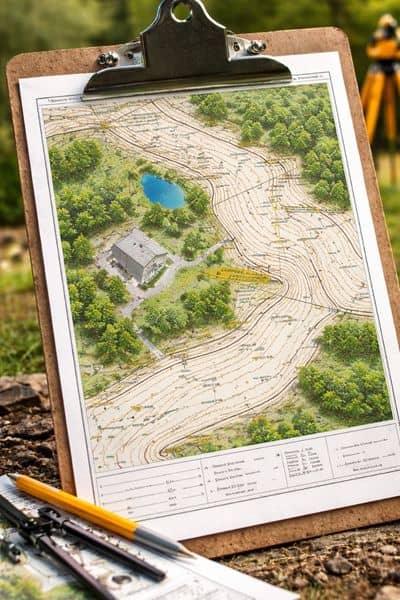
A topographic survey gives you a clear picture of your land’s true shape. It measures elevation across your property and shows how the ground rises and falls. Instead of relying on what looks flat, you can actually see how your land actually slopes and how water is likely to move after a heavy rain.
It also maps visible features like trees, driveways, and existing structures, tying everything back to the land’s elevation. That connection makes it much easier to plan your project with confidence instead of guesswork.
So while your eyes might see a flat yard, a topographic survey reveals what’s really going on beneath the surface—and that’s what helps you avoid problems later on.
The Problems Most Homeowners Don’t See Coming
Many backyard projects run into trouble not because of poor work, but because of unseen ground conditions.
Drainage is often the first issue. Water always follows the lowest path, and without knowing that path, you may build right into a problem area. After a storm, water can collect where you least expect it.
Uneven ground creates another challenge. A surface may look stable at first, yet slight elevation changes can cause settling over time. This leads to cracks, shifting, and repairs that no one planned for.
Placement decisions also become risky without proper data. What feels like the “best spot” for a project may actually sit in a low area or along a drainage path. That mistake doesn’t show up until it’s too late.
These are not rare situations. They happen every day, especially when projects begin without a topographic survey.
Why Backyard Projects Depend on Proper Elevation Data
Backyard upgrades often focus on design and materials. However, the ground underneath matters just as much.
A patio needs stable, well-prepared soil. A pool requires proper grading so water doesn’t collect around it. A driveway must sit at the right slope to prevent runoff issues.
Without understanding elevation, each of these projects carries hidden risks. Water can flow toward structures instead of away from them. Surfaces can weaken over time. Repairs become more expensive than the original build.
Because of this, planning with accurate land data changes everything. A topographic survey helps you see the full picture before construction begins.
A Situation Many Homeowners Recognize
Picture this. A homeowner installs a new patio in what seems like the perfect location. The area looks level, and the build goes smoothly.
Then rain hits.
Water starts to gather along one side of the patio. It doesn’t drain away as expected. Over time, the surface begins to shift. Small cracks appear, and the once-perfect space becomes a problem area.
Now the homeowner faces added costs and frustration.
This situation could have been avoided. A topographic survey would have shown the slope and drainage pattern before the project started. With that information, the design could have adjusted early on.
Instead of fixing a problem, the homeowner could have prevented it.
How a Topographic Survey Helps You Build Smarter
When you have accurate elevation data, your entire project improves.
You can choose the right location for structures. You can guide water away from your home instead of toward it. You can prepare the ground correctly before construction begins.
Contractors, engineers, and designers rely on this type of data to create stable and lasting builds. Without it, decisions often come down to guesswork.
A topographic survey removes that uncertainty. It turns your project into a planned process instead of a trial-and-error situation.
When It Makes Sense to Get a Topographic Survey
Not every project requires detailed land data. However, many backyard improvements do.
If you plan to build, change the landscape, or deal with drainage, understanding your land becomes essential. Sloped areas, uneven ground, or past water issues are clear signs that you need better insight before moving forward.
Working with a professional land surveyor or licensed land surveyor ensures that the information you receive is accurate and useful. That accuracy protects your investment and helps your project succeed from the start.
Build with Confidence, Not Assumptions
The biggest issues in construction often come from what people can’t see. Small elevation changes can lead to large problems when ignored.
A topographic survey gives you the clarity to understand your land before you build on it. It helps you avoid drainage issues, prevent structural problems, and plan your project the right way.
So before you move forward with your next backyard upgrade, take a moment to look beyond the surface.
Because when you understand your land, you build with confidence—and you avoid mistakes that cost time, money, and peace of mind.
