

Aerial surveying is now a must for land development across Dallas. From new neighborhoods in Frisco to flood studies near the Trinity River, drones help surveyors map big areas fast and with great accuracy. But a new problem is rising above the city—GPS interference. It’s forcing survey crews to change how they plan flights, collect data, and deliver maps.
In the past few days, news outlets have reported GPS jamming around the world. While it hasn’t hit Dallas yet, the risk is real. Every drone depends on strong GNSS signals—the satellites that tell it where it is. When those signals get jammed or faked, even the best aerial surveying drone can lose accuracy.
The invisible problem above Dallas
Most people never think about GPS. It just works. But for surveyors, it’s everything. Every elevation, every boundary, every line on a map depends on satellite precision—down to the inch.
So what happens when those signals get scrambled?
Picture a drone flying over a construction site near Uptown Dallas. Halfway through mapping, the signal drops. The drone keeps flying, but the data shifts slightly. A few inches off here and there can ruin an entire 3D model. That means wasted time, re-flights, and unhappy clients waiting for fixed results.
Why GPS interference keeps growing
Two main things cause trouble: jamming and spoofing.
- Jamming blocks the real satellite signal.
- Spoofing sends out fake ones to trick the drone into “thinking” it’s somewhere else.
These issues are showing up more often, especially around airports and big cities. Dallas—with its tall buildings, busy DFW airspace, and steady tech growth—is at risk too. Even without active jamming, signals can bounce off glass towers, causing errors called multipath. Downtown crews know this problem well.
How Dallas crews are staying ahead
Survey teams aren’t waiting for disaster. They’re already adjusting their aerial surveying workflows to stay accurate when GPS acts up.
First, many use multi-constellation tracking. That means their drones connect to several satellite systems—GPS, GLONASS, Galileo, and BeiDou. If one gets weak, another keeps the data steady.
Second, more surveyors are setting ground control points (GCPs) again. These are markers with known coordinates placed on the site. When drone data drifts, the GCPs help correct the map later. It takes a little extra setup but saves hours of re-work.
Third, crews plan smarter flight times. Mornings and late afternoons tend to have fewer signal issues. Before every launch, surveyors also check FAA flight advisories near DFW for any GNSS warnings.
A day on site when RTK cuts out
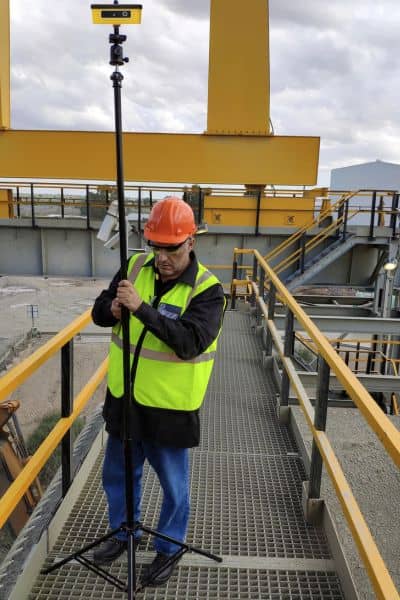
Let’s say you’re surveying a 20-acre lot in Richardson. The drone is using real-time kinematic (RTK) corrections to stay exact. Suddenly, RTK drops.
Instead of stopping work, your team switches to a local base station that gives its own corrections. The pilot adjusts the route to focus on the most important parts first. Later, in the office, the team lines up all the drone images with ground control points and gets accuracy back within a few centimeters. The client still gets the report on time—no delays, no panic.
Why Dallas is a tricky place to fly
Dallas brings a mix of surveying challenges. Downtown and Las Colinas have glass buildings that bounce GPS signals. In open areas like McKinney or Forney, telecom towers and cranes can still cause noise.
Heat and humidity also play a role, slightly bending signals and affecting sensors. With so many new construction projects—roads, neighborhoods, and drainage systems—surveyors must keep an eye on every small change in the sky.
To fly safely, most firms keep their FAA Part 107 licenses current and use LAANC authorization when near restricted zones. This keeps flights legal and reduces the risk of GPS loss.
What clients should know
If you’re a developer or property owner hiring a drone surveyor, you may ask, “Will GPS problems delay my project?” Usually, no. Skilled teams are ready for this.
Dallas aerial surveying crews already plan backup methods. They take overlapping photos, collect manual checkpoints, and double-check control points before leaving a site. Even if GPS drops for a moment, they can still build accurate maps for grading plans, site layouts, or flood analysis.
That’s why it’s smart to hire a licensed land surveyor who knows local rules and technology. They’re not just flying drones—they’re managing safety, precision, and data reliability every step of the way.
The future of aerial surveying in Dallas
The next step isn’t avoiding interference—it’s beating it with better tools. Some surveyors are now using AI software that finds GPS drift during processing. Others run live monitoring systems that alert them when signal strength weakens.
Many store backup coordinate data in the cloud, so teams can check results right after a flight. This makes aerial surveying more dependable and keeps developers confident their projects won’t slow down.
Final thoughts
GPS interference may be invisible, but it’s something every drone operator now plans for. The skies over North Texas are busier than ever, with drones mapping, inspecting, and documenting daily progress.
Aerial surveying remains the fastest and most cost-effective way to capture topographic and construction data. The only difference is that surveyors are now flying smarter—ready for anything, even when the satellites misbehave.
If you’re planning a new build, subdivision, or infrastructure project, choose a survey team that understands these new challenges. Because in Dallas, accuracy depends not just on satellites—but on people who know how to stay precise when the signal fades.
